
2.1 Patient-Centred Services
Chung Shan Medical University Hospital upholds the core values of “Caring for People, Treating Disease, and Healing the Heart” and continues to promote a patient-centred model of care. Beginning with the needs of patients and their families, the Hospital strengthens patient participation in the care process through feedback mechanisms, physician-patient communication, shared decision-making, end-of-life care consultations, and staff education and training, while enhancing transparency and trust in healthcare services.
The Social Service Office coordinates the handling of public suggestions and complaints in accordance with standard operating procedures for documentation, classification, and follow-up, using the results as a basis for service improvement and process optimisation. During the care process, the Hospital promotes Shared Decision-Making (SDM). Before and after admission, physicians use admission briefings, treatment plans, videos, Patient Decision Aids (PDAs), and other informational tools to fully discuss treatment options and care arrangements with patients and their families, helping them understand their medical condition and participate in decision-making.
In response to population ageing and growing demand for end-of-life care, the Hospital also provides end-of-life care consultations. Through discussions regarding patients’ preferences for end-of-life care and family meeting mechanisms, patients are supported in expressing their wishes and preferences, while families and healthcare teams are assisted in reaching a shared understanding of care goals.
The Hospital also provides annual education and training on patient rights, medical ethics, SDM, and end-of-life care to strengthen healthcare professionals’ communication skills, sensitivity in care, and professional accountability, thereby continuing to put people-centred sustainable healthcare into practice.
Patient Feedback Channels
The Hospital has designated the Social Service Office as the dedicated unit responsible for receiving feedback from patients and their families. Professional social workers with strong empathy and communication skills are responsible for listening, receiving, coordinating, and responding to feedback.
Members of the public may submit feedback through suggestion boxes, telephone calls, the Superintendent’s mailbox, social media, or directly to individual departments. The Hospital has also established the Standard Operating Procedure for Public Feedback, under which feedback is classified as compliments, suggestions, complaints, or cases not accepted for formal processing, and is documented, categorised, tracked, and addressed accordingly.
To ensure traceability throughout the handling process, feedback and response records are entered into the Hospital Information System (HIS) for subsequent follow-up and service improvement. In 2025, the Hospital continued to strengthen its existing feedback management mechanisms by ensuring comprehensive documentation, timely responses, and cross-departmental follow-up and support. For cases requiring ongoing attention, a cross-departmental care team is convened to monitor improvement outcomes, while service processes are continuously optimised to enhance patient and family satisfaction.
In 2025, the Hospital received a total of 963 patient feedback cases. Compliments increased by 2.9% compared with 2024, while suggestions and complaints decreased by 1.2% and 0.6%, respectively. The response rate within 24 hours reached 94%, up 1.9 percentage points from 92.1% in 2024. These results indicate that patient feedback has been progressively incorporated into a systematic tracking and timely response process, making it an important basis for service improvement.
Patient Experience Survey
The Hospital conducts annual patient experience surveys covering outpatient, emergency, and inpatient services. Surveys are administered through both paper-based and online channels, and the Hospital continuously analyses satisfaction results and areas requiring improvement.
For example, measures such as adding blood-drawing counters and introducing quality control circle initiatives to improve laboratory waiting processes have significantly enhanced patient satisfaction. Survey results are also incorporated into management indicators for individual units and are reviewed by the Healthcare Quality and Patient Safety Committee. Improvement plans are subsequently developed and continuously tracked by the Center for Healthcare Quality to promote comprehensive service optimisation.
| Survey Category | Valid Responses in 2025 | 2025 Satisfaction | 2024 Satisfaction | Internal Target | Achievement |
| Outpatient | 302 | 90.50% | 91.00% | ≥89% | Target achieved |
| Inpatient | 313 | 93.90% | 93.40% | ≥90% | Target achieved |
| Emergency Department | 206 | 83.80% | 89.20% | ≥89% | Target not achieved; identified as a priority for follow-up improvement |
Note: Internal satisfaction targets are established in accordance with the Hospital’s service quality management objectives. Emergency Department satisfaction declined in 2025 because the entire emergency care area underwent renovation, requiring temporary adjustments to patient routes and service processes.
Promoting Patient Participation
The Hospital places strong emphasis on patients’ right to be informed and involved throughout the care process. Prior to admission, attending physicians explain the necessity of hospitalisation and the proposed treatment plan to patients and their families, with records retained to confirm mutual understanding.
During treatment, the Hospital promotes Shared Decision-Making (SDM) through supporting materials and audiovisual explanations, helping patients and their families understand available treatment options and reach a shared understanding with the healthcare team.
To respect patient autonomy, the Hospital has also established Advance Care Planning (ACP) services. Through educational information, dedicated teams, family meetings, and relevant documentation, patients approaching the end of life are supported in expressing their care preferences. In 2025, the SDM response rate increased from 70% to 76%, demonstrating continued growth in patient and family participation in treatment discussions.
Strengthening Employee Education
The Hospital places strong emphasis on training all personnel in patient rights, physician-patient communication, medical ethics, and SDM. Guided by the three core principles of whole-person care, ethical practice, and professional development, relevant discussions and cases are developed into internal teaching materials.
Through interdisciplinary case discussions, medical ethics meetings, and service education and training, the Hospital continues to strengthen employees’ sensitivity to communication, empathy, and respect for patient autonomy, ensuring that patient-centred services are reflected not only in formal procedures but also in everyday interactions.
The Hospital also trains social workers to respond appropriately according to different types of feedback. Units demonstrating outstanding service performance are publicly recognised and presented with certificates of appreciation, helping to strengthen a positive service culture and put the core principle of “patient-centred care” into practice.
2.2 Building Patient-Friendly Relationships
Improving Healthcare Accessibility and Supporting Vulnerable Groups
As a contracted healthcare provider under Taiwan’s National Health Insurance system, the Hospital provides services primarily through National Health Insurance coverage. Through the Social Service Office, it also assists patients experiencing financial hardship, catastrophic illness, or emergency and critical medical needs in accessing subsidies and charitable resources, thereby reducing the risk that necessary treatment may be affected by insurance status or ability to pay.
Some patients face financial hardship and barriers to healthcare due to unemployment, disability, or lack of family support. They may be unable to afford medical expenses, self-paid medical devices, or medicines and may also lack adequate caregiving support.
To address these needs, the Hospital has established the Social Service Office as a platform for supporting vulnerable populations and connecting them with appropriate resources. Professional social workers proactively intervene to assist patients in applying for external donations and to connect them with local government and civil society resources. Appropriate subsidies are provided to low-income households, patients with catastrophic illnesses, and those requiring emergency or critical care to ensure that access to necessary healthcare is not interrupted by financial circumstances.
In 2025, the Hospital further expanded its support for vulnerable patients, assisting economically disadvantaged patients and families on 455 occasions, an increase of more than 20% from the previous year. Total subsidies rose to more than NTD 7.75 million, representing an annual increase of nearly 40%. These results demonstrate that, while expanding the reach of its support services, the Hospital has also strengthened the level of practical assistance provided to individual cases, enabling support to reach more people in need and providing more timely and meaningful assistance.
| Subsidy Category | Number of Beneficiary Cases | Subsidy Amount (NTD) | Share of Total Subsidies |
| Medical expenses | 241 | 4,776,171 | 62% |
| Caregiver expenses | 128 | 1,634,415 | 21% |
| Funeral expenses | 6 | 240,000 | 3% |
| Placement expenses | 12 | 385,000 | 5% |
| Other emergency needs | 68 | 722,612 | 9% |
| Total | 455 | 7,758,198 | 100% |
Note to Designer: Please redesign the 2025 subsidy-category statistics for economically disadvantaged patients as an infographic. The table on the left does not need to be retained.
Preoperative Cost Disclosure to Support Informed Choice
When a patient is assessed by a physician as requiring surgery, the physician provides a full explanation to the patient or family in accordance with Article 63 of the Medical Care Act, including the reasons for surgery, expected costs, success rate, and possible complications, and obtains written consent.
Before surgery, the Department of Anesthesiology also conducts an anaesthetic assessment and obtains signed anaesthesia consent. Where self-paid special medical materials, medicines, or procedures are involved, the healthcare team explains the reason for use, cost, characteristics, and potential adverse effects, and compares the effectiveness of National Health Insurance-covered and non-covered options. A self-pay consent form is signed only after the patient has agreed, ensuring full understanding and autonomous choice.
All self-paid items are approved by the competent authority and publicly disclosed on the Hospital’s website for reference.
| Strategic Objective | CSMUH Actions |
| Preoperative cost disclosure to support informed choice | • The healthcare team explains the procedure and associated costs before surgery. • Patients sign both the Surgical Consent Form and Self-Pay Consent Form. • Items not covered by National Health Insurance are fully disclosed to ensure regulatory compliance and respect for patient autonomy. |
| Transparent disclosure of fee information | • National Health Insurance fees follow the payment standards of the National Health Insurance Administration. • Self-paid items undergo internal review and are submitted to the competent authority for approval. • Fee information is disclosed on the Hospital website and at payment counters. [Insert link: CSMUH Fee Information] • Itemised receipts are provided upon discharge and for outpatient and emergency visits to ensure transparency of information. |
Distinctive Patient-Friendly Services
(1) Diverse and Digital Health Education Resources
To strengthen patient health literacy and improve access to medical information, the Hospital integrates website resources, social media platforms, audiovisual displays in outpatient waiting areas, LINE-based real-time consultation, the Ovideo AI Video Platform, and the intelligent nursing support platform “Head Nurse Xiao-Nan” to provide diverse, timely, and user-friendly health education services.
Through the Ovideo AI Video Platform, commonly used patient education leaflets, such as fall-prevention guidance, acute pain relief information, and peripheral intravenous catheter care instructions, are converted into audiovisual educational materials, providing patients and their families with more diverse ways to access and understand health information.
The intelligent nursing support platform “Head Nurse Xiao-Nan” integrates multilingual patient education materials and can be accessed in real time through nursing carts, mobile devices, and the HIS nursing system. It supports patients of different nationalities, people with hearing or speech impairments, and those with other special communication needs by providing access to foreign-language materials, lip-reading, sign language, Braille education materials, real-time transcription, and interpretation resources, thereby reducing communication barriers.
| Delivery Channel | Implementation | Service Benefits |
| Website Section | Maintains the “CSMUH Healthcare Stories” section and regularly updates patient education and health lecture information | Enables convenient access to up-to-date health information and improves accessibility of patient education |
| Social Media Platforms | Publishes health education content through Facebook, YouTube, and Telegram | Expands the reach of health information and strengthens public health literacy |
| Outpatient Waiting Areas | Uses television displays to broadcast health education videos | More than 83 health education videos have been shown, making effective use of waiting time to promote health knowledge |
| LINE Real-Time Consultation | Case managers provide one-to-one health information and care-related consultation | Provides timely and personalised support and strengthens the confidence of patients and families in managing care |
| Intelligent Nursing Support Platform “Head Nurse Xiao-Nan” | Supports multilingual patient education materials and integrates foreign-language, lip-reading, sign-language, Braille, real-time transcription, and interpretation resources | More than 3,000 patient education leaflets have been translated using AI, with 6,008 cumulative views. Comprehension of non-Chinese versions exceeded 96%, and no complaints related to insufficient communication caused by language barriers were recorded in 2025 |
Taiwan’s First Intelligent Nursing Support Platform
1. Accelerated Learning for New Nurses
Built-in nursing standard operating procedures and clinical practice guidelines provide instant answers to common questions, helping newly recruited nurses shorten their learning curve and adapt more quickly to clinical practice.
2. Multilingual Patient Education
Supports patient education materials in multiple languages, including English, Japanese, Korean, Thai, Vietnamese, and Indonesian. This enables timely access to health information and helps reduce communication barriers between healthcare professionals and patients.3. Intelligent Nursing Documentation
An AI-powered summarisation system enables nurses to generate admission nursing records with a single click. The average documentation time has been reduced from approximately 103.8 minutes to 5.8 minutes, significantly easing nurses’ administrative workload while improving efficiency and quality of care.
(2) Friendly Communication and Accessible Services
The Hospital continues to enhance patient-friendly services from three perspectives: communication support, the physical environment, and interactions between healthcare professionals and patients. These efforts are designed to help patients with different language, age, physical, and psychological needs access care with greater confidence and ease.
In addition to using the “Head Nurse Xiao-Nan” platform and multilingual patient education resources to reduce communication barriers, the Hospital has completed the renovation of the accessible restroom near the Emergency Department on the first floor of the Nuclear Medicine Building, further improving the care environment for patients with special needs.
The Hospital also places strong emphasis on the quality of communication between healthcare teams, patients, and their families. In 2025, the Hospital received 449 compliments from patients or family members regarding positive healthcare experiences, while complaints arising from unclear communication or insufficient explanation decreased slightly by 0.6%. These results demonstrate that effective communication has become an integral part of service improvement and the maintenance of positive patient-provider relationships.
(3) Roving Services and On-Site Assistance
To enhance the patient experience and improve service efficiency, the Hospital continues to provide roving assistance and on-site support. Outpatient areas are equipped with registration and cashier counters, service desks, and volunteer service teams to provide consultation and wayfinding assistance.
Self-service check-in kiosks, dedicated service counters, and separate medication collection counters are also available for laboratory testing, examinations, and prescription collection, improving healthcare accessibility and service flow.
For pregnant patients, people with mobility limitations, and older adults aged 80 and above, designated Priority Service Counters and clear signage are provided in service areas to offer priority assistance.
The Hospital also remotely monitors the number of people waiting at service counters. When the queue exceeds 20 people, an alert is triggered and additional staff are deployed during peak periods to guide patients in using self-service payment facilities. These measures help reduce excessive waiting times and support a more convenient and patient-friendly healthcare experience.
(4) Convenient Service Optimisation and Digitalisation
To improve convenience and service efficiency, the Hospital continues to optimise healthcare processes and payment mechanisms. All service fees and self-paid items are publicly disclosed. Patients collecting the second or third refill of a chronic prescription are not charged an additional registration fee, and patients who are unable to complete scheduled examinations on the day of their visit are not charged additional fees when the examination is rescheduled.
Laboratory blood test results can also be accessed free of charge through the CSMUH e-Service App, strengthening the Hospital’s digital service touchpoints.
The Hospital provides 24-hour admission and discharge services throughout the year, including public holidays. Dedicated daytime service counters and the Emergency Department counter provide continuous coverage to ensure uninterrupted access to care.
In 2025, the Hospital further introduced mobile payment services at nursing stations, enabling inpatients to settle their medical expenses directly at the ward nursing station upon discharge. This initiative reduced the number of patients queuing at payment counters by 7.6%. At the same time, the advance appointment period was extended from 13 weeks to 15 weeks, providing patients with greater flexibility in arranging follow-up visits and treatment schedules.
Multiple payment channels have also been introduced, including self-service payment kiosks, the Hospital app, online payment, ezPay Medical, and PXPay Plus. Between 2024 and 2025, the proportion of payments completed without visiting a service counter increased from 27.67% to 29.21%. For the second and third refills of chronic prescriptions, the proportion of non-counter medication collection reached 95.31%, supporting patient convenience, service efficiency, and the continued development of smart healthcare services.
2.3 Healthcare Quality
Healthcare Quality Governance
Guided by the service philosophy of “Giving Back to Society What We Receive from Society,” Chung Shan Medical University Hospital continues to strengthen patient safety and healthcare quality.
Under the oversight of Chung Shan Medical University, the Superintendent attends the University’s medium- and long-term development plan review and monitoring meetings every six months and participates in University Affairs Meetings and Board meetings on a quarterly basis to report on Hospital operations and management performance.
In addition, designated members of the Board of Directors attend the Hospital’s quarterly Management Meetings. Through regular participation and review, the Board strengthens oversight of the implementation and effectiveness of healthcare quality and patient safety policies and provides recommendations in accordance with the Hospital’s overall development objectives. The Board also provides extensive academic and research resources to support the Hospital’s continuous quality improvement and sustainable development.
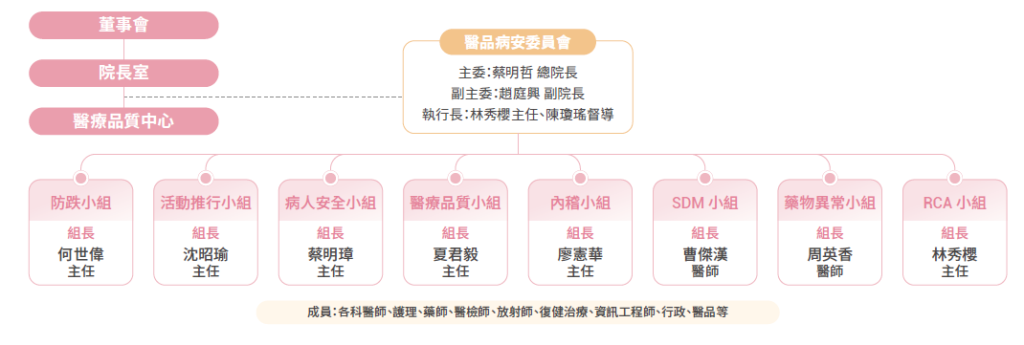
The Healthcare Quality and Patient Safety Committee serves as the Hospital’s highest-level decision-making body for quality management. The Superintendent serves as Chair, while the Vice Superintendent of the Center for Healthcare Quality serves as Vice Chair. A nursing supervisor and director-level physicians serve as executive officers, and external experts in healthcare quality and patient safety are invited to provide professional guidance.
The Committee oversees eight functional working groups, each chaired by a physician. Membership spans multiple professional disciplines and comprises a total of 30 members, including two public representatives from the legal profession and the Hospital’s volunteer community. Regular meetings are held, with resolutions and implementation outcomes formally reported, ensuring that diverse perspectives are incorporated into decision-making.
In accordance with the Ministry of Health and Welfare’s Nine Goals for Healthcare Quality and Patient Safety for 2024–2025, the Hospital has established a quality governance framework that combines both top-down and bottom-up approaches.
The Healthcare Quality and Patient Safety Committee serves as the central decision-making body, while the Center for Healthcare Quality is responsible for overall coordination and implementation. Institutionalised mechanisms—including adverse event reporting, Root Cause Analysis (RCA), and quality indicator management—are used to oversee functional working groups, promote cross-departmental collaboration, and support continuous improvement.
At the same time, frontline clinical staff are encouraged to proactively identify problems and propose improvement measures. Through platforms such as quality improvement proposals, internal unit reviews, and cross-departmental seminars, the Hospital promotes bottom-up participation, enabling frontline experience to be communicated to decision-makers and creating a two-way cycle of quality improvement. Each unit develops and implements quality action plans according to the nature of its responsibilities. Through the Plan-Do-Check-Act (PDCA) cycle and on-site audits, the Hospital reinforces the implementation of systems, monitors improvement progress, and puts the principle of patient-centred and safe care into practice.
| Governance Level of the Healthcare Quality and Patient Safety Committee | Unit | Core Responsibilities |
| Decision-Making Level | Healthcare Quality and Patient Safety Committee | • Convene quarterly meetings • Review improvement proposals submitted by individual units • Include public representatives in decision-making • Report implementation outcomes to the management team |
| Executive Hub | Center for Healthcare Quality | • Consolidate adverse event reports and conduct RCA analyses • Manage quality indicators such as THIS and TCPI • Oversee the eight functional working groups • Maintain the PDCA tracking database |
| Action Units | Clinical and administrative departments / units | • Establish unit-specific quality indicators and improvement targets • Report adverse events promptly • Cooperate with the Center for Healthcare Quality in education and improvement initiatives |
Healthcare Quality Development Strategy
The Hospital has established a comprehensive quality governance framework, with the Healthcare Quality and Patient Safety Committee responsible for overall oversight and the Center for Healthcare Quality responsible for implementation. Through institutionalised processes and indicator monitoring, the Hospital continues to strengthen its quality culture and implementation effectiveness.
Each year, the Hospital develops an Annual Healthcare Quality and Patient Safety Plan as the operational blueprint for quality development. Its strategic directions are closely aligned with the Hospital’s overarching goals of Precision Medicine, Smart Innovation, Whole-Person Care, and Sustainable Development, ensuring that quality improvement and patient safety are embedded into routine and institutionalised management.
In 2025, quality initiatives focused on five major directions:
- Implementing patient safety goals
- Continuing to cultivate healthcare quality and patient safety professionals
- Promoting diverse and interdisciplinary quality improvement
- Continuing to develop distinctive models of healthcare delivery and obtaining external certifications
- Supporting healthcare institutions within the region in improving healthcare quality and patient safety
(1) Implementing Patient Safety Goals
In accordance with the patient safety goals established by the Ministry of Health and Welfare, the Hospital continues to implement the core principles of patient safety through diverse strategies and concrete actions, while demonstrating measurable governance outcomes.
In the areas of patient safety systems and organisational governance, the Hospital has continued to strengthen the quality of its Root Cause Analysis (RCA) practices. In recognition of these efforts, the Hospital received an Outstanding Award in an RCA competition organised by the Joint Commission of Taiwan and an Excellence Award in an RCA competition organised by the Taiwan Healthcare Quality Association. These achievements demonstrate the Hospital’s benchmark-level capabilities in systematic risk identification and improvement.
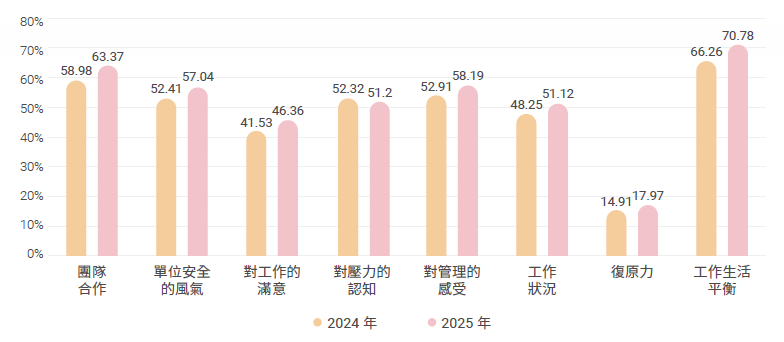
In fostering a reporting culture, physician reporting has gradually increased, reflecting growing awareness of patient safety across professional disciplines. The Hospital records an average of 261 adverse event reports per month, demonstrating a strong culture of transparency and proactive disclosure. In the 2025 Patient Safety Culture Survey, most of the eight dimensions showed improvement (Figure 1), reflecting the continued strengthening of the Hospital’s organisational safety climate.
In practical patient safety implementation, the Hospital deepened organisation-wide participation through patient safety rounds and proposal mechanisms. In 2025, 12 units were visited, identifying 42 patient safety-related issues, of which 40 were resolved. In addition, four proposals were received, three of which were approved, with a total of NTD 9,000 in incentives awarded. These mechanisms encourage innovation and continuous improvement in a structured manner.
To address high-risk fall events, the Hospital continues to implement a dedicated fall-prevention programme. An AI-powered bed-exit alert system has been introduced to detect fall risks in advance, while the fall-risk assessment form has been optimised to improve sensitivity in identifying high-risk patients. A real-time post-fall reporting and alert mechanism has also been established, forming a complete closed-loop management model of prevention – monitoring – immediate response – improvement feedback, thereby strengthening the patient safety net.
Through the combined advancement of institutional governance, technology adoption, and safety culture, the Hospital continues to improve healthcare quality and patient safety performance, demonstrating the responsibility and long-term commitment of a healthcare institution within the Governance dimension of ESG.
(2) Continuing to Cultivate Healthcare Quality and Patient Safety Professionals
The Hospital places strong emphasis on patient safety literacy and a culture of quality across all employees. Healthcare quality and patient safety training are incorporated into both new employee orientation and managerial education.
To cultivate leaders in healthcare quality and patient safety, the Hospital has established the Healthcare Quality and Patient Safety Training Regulations. Through systematic and planned development, the Hospital continues to cultivate mid- and senior-level leaders as well as quality and safety champions within individual units, establishing an interdisciplinary professional talent pool and strengthening overall governance capabilities in healthcare quality and patient safety.
As of 2025, training outcomes were as follows:
| Training Programme | Number of Participants |
| Joint Commission of Taiwan Healthcare Quality Academy – Basic / Intermediate / Advanced RCA Courses | 27 / 10 / 7 |
| Taiwan Healthcare Quality Association – Healthcare Quality Specialist / Advanced Healthcare Quality Specialist | 24 / 5 |
| Taiwan College of Healthcare Executives – Advanced Healthcare Management Specialist | 4 |
| Corporate Synergy Development Center – Quality Control Circle Facilitator | 84 |
In addition to mid- and senior-level managers, the Hospital systematically develops physicians, nurses, allied health professionals, and administrative staff as core Quality and Patient Safety Champions. Through tiered professional training and practical exercises, these personnel strengthen the ability of individual departments and units to independently advance quality improvement and patient safety goals.
The Hospital currently has 48 clinical Quality and Patient Safety Champions, including 10 physicians, 30 nursing staff, and 8 allied health and administrative personnel, forming a multidisciplinary and multi-level quality improvement network.
Consensus meetings for Quality and Patient Safety Champions are held regularly to communicate Hospital-level strategies, promote key issues, and exchange improvement outcomes. This establishes a two-way governance mechanism combining top-down policy guidance with bottom-up practical feedback, ensuring that healthcare quality and patient safety policies are effectively implemented in frontline care settings.
In terms of professional achievements in healthcare quality and patient safety, the Hospital continued to demonstrate strong performance in 2025. A total of 22 poster presentations and 2 oral presentations were accepted at the ISQua International Conference. These practical quality-improvement achievements were showcased on an international professional platform, demonstrating the Hospital’s capabilities in quality management while significantly enhancing its international visibility and professional influence and strengthening its leadership role within the global healthcare quality community.
(3) Promoting Diverse and Interdisciplinary Quality Improvement
Building on its institutionalised governance framework, the Hospital promotes diverse and interdisciplinary quality improvement strategies across six major areas.
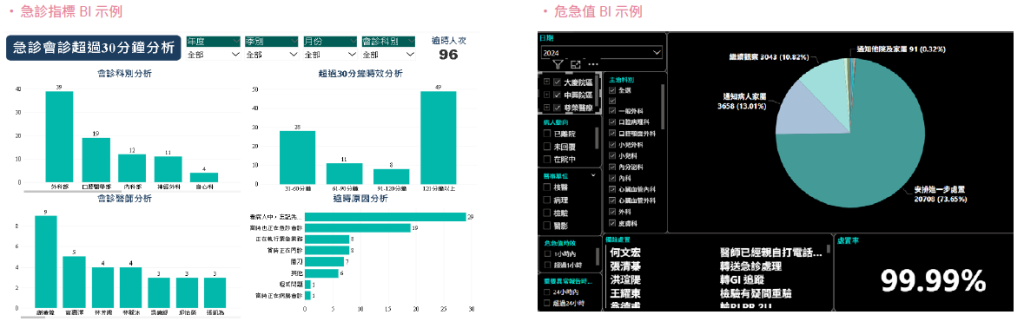
In quality indicator management, the Hospital has implemented the Quality Indicator Automated Data Transfer Project since 2021. By integrating information systems and introducing Business Intelligence (BI) tools, the Hospital has strengthened data integration and real-time monitoring capabilities. This has improved the timeliness and accuracy of quality indicators while reducing manual workload and the risk of human error, establishing a data-driven foundation for quality management.
At the Hospital governance level, a framework of core quality indicators has been established, incorporating target-based management and a traffic-light early-warning mechanism. Quality indicator meetings are held every two months to conduct trend analyses and review improvement actions. The Hospital also conducts benchmarking against peer medical centres and uses the results to dynamically revise annual targets and implementation strategies.
At the same time, the Hospital actively participates in external quality benchmarking programmes and assessments to promote both internal and external learning and continuous improvement.
Example of Emergency Department BI Indicators:
(4) Continuing to Develop Distinctive Models of Care and Obtain External Certification
The Hospital is committed to building high-quality, innovative, and patient-centred integrated care models, while actively participating in external certification programmes and healthcare quality awards to demonstrate its strengths in clinical services and medical innovation.
By 2025, the Hospital had obtained eight Disease-Specific Care Quality Certifications from the Joint Commission of Taiwan, covering major chronic conditions such as heart failure, diabetes, and dementia. These achievements reflect the depth and breadth of the Hospital’s efforts in standardised care and interdisciplinary team integration. The Hospital has also consistently passed hospital accreditation, medical centre mission indicator assessments, and advanced-level emergency medical capability accreditation, demonstrating its institutionalised governance and ability to respond to emergency and critical care needs.
■ Advancing Smart Healthcare
The Hospital actively promotes smart healthcare and digital transformation across clinical workflows. Applications include real-time adverse-effect feedback systems for cancer patients, intelligent antibiotic dose recommendations, anticoagulant medication decision-support systems, and AI-powered nursing assistants.
Through clinical decision support and real-time risk alert mechanisms, these technologies help reduce the risk of human error, optimise healthcare workflows, and ease clinical workloads. In 2025, related achievements received six Smart Healthcare category recognitions in the National Healthcare Quality Award (NHQA), demonstrating tangible progress in integrating smart technologies with patient safety.
■ Excellence in Healthcare Services
In 2025, the Hospital received one Platinum Award and one Gold Award in the Outstanding Healthcare Award category of the National Healthcare Quality Award organised by the Joint Commission of Taiwan.
These distinctions demonstrate the Hospital’s outstanding performance in clinical care quality, integrated healthcare delivery, and professional governance. They not only recognise the Hospital’s continuous quality improvement efforts, but also reinforce its benchmark position and leadership role in Taiwan’s healthcare quality sector.
Overall, by integrating clinical care, smart technologies, and institutional governance, the Hospital continues to build an innovative, integrated, and sustainable healthcare system and advance towards becoming a benchmark medical centre for high-quality, patient-centred care.
(5) Implementing Quality Programmes in Alignment with National Policy
The Hospital is committed to serving as a regional leader in healthcare quality and has long supported healthcare institutions at different levels in establishing and strengthening healthcare quality and patient safety mechanisms.
Since 2013, the Hospital has participated in the Ministry of Health and Welfare’s Hospital Quality Performance Measurement Indicator System and Quality Improvement Pilot Programme (P4P). It has actively supported partner hospitals in integrating routine quality indicator collection into daily operations, improving data accuracy and strengthening their quality improvement capacity.
Between 2020 and 2025, the Hospital conducted 26 on-site support visits, 30 education and training sessions, 2 team exchange meetings, and 14 indicator audits, and assisted partner hospitals in completing 62 quality improvement projects. Participating hospitals have repeatedly received recognition from the Ministry of Health and Welfare and the Joint Commission of Taiwan.
Since 2023, the Hospital has served as the lead hospital for the Innovative Integrated Cross-Level Care Programme (IIC), working with six regional emergency-responsibility hospitals to strengthen medical record information security and electronic medical record transmission. Through case conferences, green-channel referral mechanisms, Team Resource Management (TRM) simulation training, and Shared Decision-Making (SDM) courses, the programme promotes tiered healthcare and two-way referral, supporting patient-centred continuity of care.
In addition to quality improvement initiatives, the Hospital also helps cultivate dedicated healthcare quality and patient safety personnel in small and medium-sized hospitals throughout the region. Training courses cover PDCA, RCA, TRM, SDM, and other quality improvement methodologies. Between 2020 and 2025, partner hospitals participated in 30 training sessions with 743 participant attendances. The Hospital also provides partner institutions with free places in selected in-house training programmes to continuously strengthen professional capabilities. Although P4P funding ceased in 2021, the Hospital has continued these efforts as part of its regional responsibility.
In policy participation and advocacy, the Hospital actively supports patient safety goal promotion and Patient Safety Week activities organised by local health authorities. Its efforts have received recognitions including the Creativity Award and Outstanding Implementation Award from the Joint Commission of Taiwan.
The Hospital has also organised international walking events, film festivals, seminars, and other advocacy activities for five consecutive years to promote a positive safety culture.
Overall, through institutionalised quality management, talent development, policy collaboration, and cross-hospital integration, the Hospital has successfully supported healthcare institutions throughout the region in jointly improving healthcare quality and patient safety, thereby fulfilling the local responsibility and public value of a university-affiliated medical centre.
2.4 Medication Safety
Medication safety is a critical safeguard for patient safety. Through the Pharmacy and Therapeutics Committee, pharmacy service teams, Automated Dispensing Cabinets (ADCs), prescription review, high-risk medication compounding, medication education, and controlled drug management, the Hospital has established a multi-layered error-prevention system covering prescribing, dispensing, administration, follow-up, and feedback.
These mechanisms help reduce medication errors, inappropriate medication use, and risks associated with untraceable drug flows, while continuously improving the quality of clinical care.
This section focuses primarily on institutional mechanisms and key management practices. Annual quantitative outcomes are summarised in Table 2.4-1: Summary of Key Medication Safety Outcomes in 2025 and Table 2.4-2: Smart Pharmacy Workflow Improvement Outcomes, providing supplementary evidence of the Hospital’s medication safety management performance.
Pharmacy Governance and Interdisciplinary Management
In accordance with the Articles of Organisation of the Pharmacy and Therapeutics Committee, the Hospital has established a professional Pharmacy and Therapeutics Committee as the central platform for medication policy, medication-use standards, and new drug review.
The Committee is responsible for establishing medication-use requirements, reviewing medication-use trends, evaluating new drug applications, and discussing medication safety issues. The Superintendent serves as Chair of the Committee, while the Director of the Department of Pharmacy serves as Executive Secretary, ensuring the effective operation of the Hospital’s pharmaceutical management system.
In 2025, physicians, pharmacists, and other relevant professionals continued to jointly review new drugs, evaluate the Hospital formulary, and revise medication-use standards, ensuring that pharmaceutical management addresses clinical needs, patient safety, and consistency of institutional practice. Annual outcomes are presented in Table 2.4-1.
Automated Dispensing Cabinets and System-Based Error Prevention
The Hospital continues to use smart technologies to improve medication safety and pharmaceutical management efficiency. Through Automated Dispensing Cabinets (ADCs), the ADC+S visual risk dashboard, and related management systems, medication access, dispensing, expiry dates, quantities, and distribution pathways are digitally managed, reducing risks associated with manual processes and strengthening real-time monitoring.
By 2025, ADCs had been expanded to 32 clinical units. Medication access, expiry dates, quantities, and distribution records can all be queried and tracked through the system.
Through system cross-checking, risk dashboards, and access-record audits, the Hospital continues to strengthen medication-use transparency and internal control. Details regarding coverage, system interception, and audit outcomes are provided in Table 2.4-1.
Related Link: CSMUH Department of Pharmacy – Full ADC Implementation
Smart Pharmacy and a Supportive Workplace
The Hospital has extended smart pharmacy practices beyond medication safety to include leaner workflows, low-carbon operations, and a more supportive working environment.
The inpatient pharmacy has introduced ADC systems, the “Smart Medication Cloud Cube” automated transfer cabinet, and the UD Medication Cart Pharmacy-Nursing Web System, reducing paper-based processes, repetitive movement, and manual delivery. These systems allow pharmacists, nurses, and transport personnel to devote more time to clinical care and patient services.
Through workflow optimisation, processing times for returned medications, incident reporting, routine medication collection, and emergency medication collection have all been significantly shortened. Paper use, medication-bag consumption, and operational noise have also been reduced, enabling smart pharmacy systems to improve not only efficiency but also low-carbon operations and workplace conditions.
Related systems have also been horizontally expanded to the Chung Hsing Branch, extending their benefits across the Hospital system. Detailed improvement outcomes are provided in Table 2.4-2.
High-Risk Medications and Dispensing Quality
In accordance with the 2020 Taiwan Guidelines for Handling Hazardous Drugs, the Hospital has established compliant negative-pressure and positive-pressure compounding areas and uses standardised operating procedures to manage high-risk medications such as chemotherapy drugs, Total Parenteral Nutrition (TPN), and Patient-Controlled Analgesia (PCA).
In 2025, both the proportion of high-risk medications compounded in designated areas and compliance with environmental requirements reached 100%, with no related staff exposure, contamination, or occupational safety incidents reported.
The Hospital also continuously monitors dispensing incidents and near misses. Through reporting, review, SOP revision, workflow adjustment, and retraining, abnormal events are transformed into opportunities for system improvement, helping maintain a low-risk dispensing environment. Details on high-risk medication items, dispensing incident rates, and improvement actions are provided in Table 2.4-1.
Medication Education and Patient Participation
The Hospital places strong emphasis on patients’ understanding of and participation in medication use. When patients collect medications or are discharged, pharmacists provide medication guidance, verbal education, and consultation as necessary to help them understand indications, dosage and administration, precautions, and warning signs of adverse effects.
Enhanced education and key reminders are provided for high-risk groups such as older adults, patients receiving multiple medications, and patients with chronic diseases, as well as for priority medications including anticoagulants, insulin, and oral chemotherapy drugs.
The Hospital also provides telephone consultation, a dedicated pharmacist consultation room, on-site consultation, and multilingual and accessible information resources to improve access to medication information.
In 2025, the number of patients proactively seeking consultation and providing feedback increased, indicating that patients are gradually shifting from passive recipients of medication education to active participants in medication safety. Related outcomes are presented in Table 2.4-1.
Controlled Drug Management
The Hospital applies strict tiered and designated management to controlled drugs in accordance with the Articles of Organisation of the Controlled Drugs Management Committee. The Committee regularly reviews controlled drug use across the Hospital, abnormal events, and individual case management.
Controlled drugs are stored in dedicated cabinets secured with electronic or physical locks. Prescription eligibility controls, pharmacist review, shift-by-shift handover counts, periodic inventories, and system-based tracking are used to ensure that storage, dispensing, and distribution are fully traceable.
In 2025, the Hospital continued to use ADCs, the ADC+S smart risk dashboard, the Smart Medication Cloud Cube, and an intelligent medication order tracking and positioning system to monitor controlled drug prescriptions, quantities, expiry dates, and dispensing records.
Through clarification of questionable prescriptions, abnormal-event reporting, workflow revision, and staff education and training, the Hospital continues to reduce the risks of inappropriate use and untraceable drug flows. No major controlled drug violations or regulatory penalties occurred during the year. Related management, audit, and traceability outcomes are presented in Table 2.4-1.
Table 2.4-1 Summary of Key Medication Safety Outcomes in 2025
| Management Area | Key Outcomes in 2025 |
| Pharmacy Governance | Pharmacy and Therapeutics Committee convened 4 times; 64 new drug applications reviewed; 84 medication-use standards established; 22 medication items removed from the formulary |
| Pharmaceutical Care | 17,670 prescriptions reviewed; 4,008 pharmacist interventions resulting in prescription modifications; 572 ADR reports |
| Automated Dispensing Cabinets | ADC coverage expanded to 32 clinical units; 220 medication items managed; 100% traceability of medication flow |
| System-Based Error Prevention | System cross-checks intercepted 2,615 potential errors; medication prescribing error reports increased by 8.4% compared with the previous year |
| High-Risk Medications | 90 high-risk medications compounded in designated areas; 100% compliance with designated compounding and environmental requirements |
| Dispensing Quality | 2,086 dispensing incidents and near misses recorded; 17 SOPs or workflows revised based on review findings; dispensing incident rate: 0.004965‰ |
| Medication Education | 15,466 medication guidance or verbal education encounters; 2,490 enhanced education encounters for high-risk groups; 994 enhanced explanations for priority medications |
| Patient Participation | 1,176 participants in medication safety promotion activities; 578 cases in which explanations were immediately adjusted or supplemented in response to patient feedback |
| Controlled Drugs | 52 controlled drug items managed; 365 inventory checks or audits; 100% traceability; 0 major violations or penalties |
Table 2.4-2 Smart Pharmacy Workflow Improvement Outcomes
| Improvement Area | 2025 Outcome |
| Medication Return Process | Three pharmacist-side process steps simplified, reducing overall processing time by 64.7%; two nursing-side steps simplified, saving 3 minutes per transaction |
| Incident Reporting | Online application replaced manual delivery, eliminating 9 process steps and reducing administrative processing time by 7.2 minutes |
| Medication Collection | Routine medication collection time reduced by 41.7%; emergency medication collection time reduced by 87.2% |
| Paper Reduction | Medication expiry management saved approximately 1.3 kg of A4 paper annually; paperless inpatient pharmacy operations saved an average of 92.4 kg of medication bags and paper per month |
| Carbon and Cost Reduction | Average monthly carbon reduction of approximately 140.4 kg CO₂e; monthly cost savings of NTD 33,731.5 |
| Workplace Environment | Noise levels in the inpatient pharmacy, mainly associated with dot-matrix printers, decreased from a maximum of 81.8 dB to a minimum of 45.4 dB, with an average improvement of 22.5% |
| System-Wide Expansion | The UD Medication Cart Pharmacy-Nursing Web System was expanded to Chung Hsing Hospital |
2.5 Healthcare Services
The sustainability value of healthcare lies not only in treating disease, but also in bringing prevention, follow-up, and care resources into people’s daily lives at an earlier stage.
Building on its role as a medical centre, the Hospital extends its professional healthcare expertise into communities, rural areas, schools, workplaces, and international partnerships. Through health promotion, dementia-friendly care, smoke-free environments, rural outreach services, and cross-border medical collaboration, the Hospital responds to the health needs of different populations and regions.
Community Healthcare
Through the Community Healthcare Center, the Hospital integrates internal and external resources to actively promote health across Taichung, Changhua, and Nantou. Services cover cancer screening, smoking cessation, chronic disease management, and hospice care, forming a strong local health support network.
Within the Hospital, health education activities are also provided through outpatient education, patient support groups, and maternity classes, continuously strengthening public health literacy and self-care capabilities.
In recognition of the uneven distribution of medical resources in Heping District, the Hospital provides free mobile medical services. In areas with insufficient Western medicine resources, a healthcare programme requiring only an NTD 50 copayment has been introduced to reduce financial barriers.
At the same time, integrated community screening and screening for the four major cancers are provided free of charge, lowering barriers to early diagnosis. Members of the Chung Shan Medical Network also receive selected discounts related to food, accommodation, education, and leisure, reflecting the Hospital’s people-centred approach to comprehensive care.
To strengthen community healthcare, the Hospital organises annual community seminars and health education activities covering workplace smoking cessation, integrated screening, mountain-area mobile healthcare, chronic disease control, and medication safety.
These services are combined with follow-up for abnormal screening results, achieving a 100% follow-up rate. The Hospital also continues to follow up on treatment for positive oral cancer screening cases, improving return-to-care rates and health outcomes.
In 2025, the Hospital conducted healthcare needs assessments based on the characteristics of populations within its service area and incorporated the findings into its annual community health promotion plan. This enables screening, education, follow-up, and referral to form a continuous health management pathway.
In alignment with government public health policies, the Hospital also undertook school influenza vaccination programmes and community vaccination stations, extending preventive healthcare into schools and local communities and enabling children and community residents to receive vaccinations conveniently close to home, thereby strengthening the foundations of community disease prevention.
| Key Area | Representative Outcomes in 2025 |
| Community Health Promotion | 61 community activities annually |
| Workplace Smoking Cessation Education | 20 sessions annually |
| Mountain-Area Mobile Healthcare and Rural Health Education | 36 sessions annually |
| Follow-Up of Abnormal Findings | 100% follow-up rate |
| School and Community Vaccination | 3,080 school influenza vaccinations; 268 community influenza vaccinations; 140 COVID-19 vaccinations |
| Community Healthcare Network | Connected 28 community medical groups, 35 district hospitals, 15 nursing institutions, and 703 primary care clinics |
Building a Community Dementia Care Network
In response to population ageing and the growing demand for dementia care, Chung Shan Medical University Hospital has developed a continuity-of-care model centred on the principles of whole-person care, whole-family support, whole-team collaboration, whole-course care, and whole-community engagement.
By integrating medical care, family resource coordination, social care, and community resources, the Hospital has established a care model extending from the Hospital into the home and community.
By 2025, the Hospital had assisted more than 4,500 families affected by dementia in accessing both medical and non-medical care resources. Through the Dementia Care Alliance, the Hospital connects long-term care organisations, community care stations, healthcare organisations, and community clinics, extending dementia care beyond diagnosis and treatment into daily living and local community support.
The Hospital also established Taiwan’s first “Dementia Academy”, supporting people with dementia in learning how to maintain their health and live as independently as possible, while helping caregivers develop communication skills and maintain healthy family relationships.
Dementia-friendly processes have also been integrated into outpatient, emergency, inpatient, and discharge services. In addition, the Hospital collaborates with national arts and cultural institutions to promote arts inclusion and social prescribing activities.
In 2025, the Hospital served more than 1,100 families affected by dementia, provided guidance to six dementia community service centres in Taichung City, connected 26 organisations, and organised 30 community health education and professional lectures, benefiting more than 1,600 people.
The Hospital also successfully passed the 2025 renewal review for the SNQ National Quality Mark in Long-Term Care Institution Services, demonstrating the quality of its dementia care and its achievements in community implementation.
| Key Area | Representative Outcomes |
| Family Care Resource Linkage | More than 4,500 families affected by dementia supported cumulatively; more than 1,100 families served in 2025 |
| Community Care Alliance | Provided guidance to 6 dementia community service centres in Taichung City and connected 26 organisations |
| Dementia Academy | Established Taiwan’s first “Dementia Academy” |
| Community Awareness and Capacity Building | 30 community health education and professional lectures, benefiting more than 1,600 people |
| Arts Inclusion and Social Prescribing | More than 50 arts inclusion and social prescribing activities conducted on an ongoing basis |
| Quality Recognition | Successfully passed the 2025 renewal review for the SNQ National Quality Mark |
Smoke-Free Sustainability Initiatives
The Hospital incorporates its smoke-free policy into health promotion and site governance. Through in-hospital campaigns, public-address announcements, smoke-free markings, environmental signage, cigarette-butt clean-up activities, and security patrols, the Hospital seeks to reduce patients’, families’, employees’, and community members’ exposure to second-hand and third-hand smoke, while creating a cleaner and safer healthcare environment.
Smoke-free initiatives are not limited to campus management. They also reflect the Hospital’s commitment to integrating disease prevention and healthy lifestyle promotion into everyday healthcare settings, enabling the Hospital to serve as an important platform for encouraging healthier behaviours.
Beyond campus management, the Hospital also integrates outpatient smoking cessation services and provides smoking cessation education in workplaces, schools, and construction sites. In 2025, the Hospital collaborated with the local health authority to organise the “Smoke-Free Living for Health and Well-Being” campaign, linking tobacco refusal education, smoking cessation resources, and smoke-free environment promotion to help members of the public establish healthier lifestyles.
These efforts have also received external recognition. The Hospital has twice received the International Gold Award from the Global Network for Tobacco-Free Healthcare Services (GNTH) and has received multiple smoking cessation service awards from the Health Promotion Administration, Ministry of Health and Welfare, and the Taichung City Government Health Bureau, demonstrating the Hospital’s institutionalised approach to health-promoting hospital practices.
Smoke-Free Sustainability Initiatives | From Site Governance to International Recognition
| Key Area | Actions | Sustainability Outcomes |
| Policy Implementation and Institutionalisation | Regularly review the effectiveness of smoke-free policies and strengthen site management through internal campaigns, public-address announcements, smoke-free markings, and environmental signage | Reduce exposure to second-hand smoke and maintain a clean and safe healthcare environment |
| Smoking Cessation Services and Health Promotion | Integrate clinical expertise, smoking cessation counselling, and health education support to strengthen willingness and opportunities to quit smoking | Extend healthcare services beyond treatment towards behavioural change and disease prevention |
| International and Domestic Recognition | Twice received the GNTH International Gold Award and multiple awards from the Health Promotion Administration and Taichung City Government Health Bureau | Demonstrate alignment with international standards for tobacco-free healthcare and strengthen the Hospital’s capacity as a health-promoting institution |
| Sustainability Value and Social Impact | Promote a smoke-free culture through long-term, institutionalised approaches linking healthcare expertise, health literacy, and supportive environments | Expand community health impact and fulfil ESG social responsibility and health sustainability commitments |
Rural and Underserved Healthcare Support
In response to the relatively limited healthcare resources available in mountainous and rural areas, Chung Shan Medical University Hospital has long invested in local healthcare services. The Hospital continues to support mountain-area healthcare in Heping District, Taichung, while also serving medically underserved communities such as Shengang Township and Fenyuan in Changhua County.
Through fixed-location clinics, mobile medical services, health screening, and health education, the Hospital enables older adults, people with chronic diseases, and vulnerable populations to access essential care within familiar community settings.
Screening services and education topics are planned according to local health needs, with multidisciplinary teams regularly providing diagnosis, treatment, and follow-up for abnormal findings. Between 2020 and 2025, the follow-up rate for abnormal findings identified during mobile outreach activities reached 100%, demonstrating the Hospital’s long-term commitment to reducing urban-rural health disparities, advancing health equity, and fulfilling its ESG social responsibility through professional healthcare services.
Since 2011, the Hospital has participated in the Integrated Delivery System (IDS) programme in Heping District, Taichung City, providing mobile medical and health education services to residents of mountainous and rural communities. Since 2020, the Hospital has further arranged physicians from six specialties to provide consultations at the Lishan Health Center, improving access to specialist care in underserved areas.
Health education in rural areas focuses on smoking cessation, betel nut cessation, alcohol reduction, and chronic disease prevention. Through post-screening follow-up, referral, and ongoing support, rural healthcare services are designed not as isolated outreach visits, but as part of a more continuous care pathway.
| Key Area | Representative Outcomes in 2025 |
| Mobile Healthcare in Heping District | 1,727 service encounters |
| Mobile Healthcare in Shengang, Fenyuan, and Other Rural Areas | 3,587 service encounters |
| Health Literacy Promotion | 100% achievement rate for annual activity targets; 98% public satisfaction |
International Healthcare and Cross-Border Collaboration
Chung Shan Medical University Hospital responds to cross-border health needs through its core healthcare expertise, continuously promoting medical services for international patients in Taiwan and overseas healthcare collaboration. International healthcare is integrated into the Hospital’s existing healthcare quality management system.
Through a single-window service model, one-stop service processes, patient safety safeguards, cross-cultural communication, and telemedicine, the Hospital assists patients of different nationalities, languages, and cultural backgrounds in receiving clear, safe, and continuous healthcare.
The Hospital has also long collaborated with the Ministry of Health and Welfare on healthcare cooperation programmes with Taiwan’s Pacific allies, with a particular focus on Tuvalu. In recent years, the cooperation model has progressively shifted from material donations towards local capacity building.
In 2025, the Hospital continued to support local development through specialist medical teams, telemedicine, and collaboration on medical information systems. These initiatives helped strengthen local capabilities in chronic disease management, women’s health, children’s oral health, emergency triage, and healthcare administration, enabling international medical cooperation to contribute not only to short-term missions but also to the gradual development of local public health and healthcare management capacity.
Key Initiatives
(1) Establishing a One-Stop Service Process for International Patients Seeking Care in Taiwan
To ensure that every international patient receives standardised and consistent high-quality care, the International Medical Center serves as a single point of contact integrating appointment scheduling, consultation, payment, and related administrative processes.
This model reduces the uncertainty patients and their families may experience in an unfamiliar healthcare environment. Standardised procedures are also established for common international healthcare needs, with clinical pathways continuously optimised to reduce language and cultural barriers. As a result, care for international patients is incorporated into the Hospital’s existing quality management system rather than handled on an ad hoc basis.
(2) Strengthening Patient Safety and Cross-Cultural Communication
Patient safety is at the core of international healthcare services. The Hospital places strong emphasis on informed consent and provides consent forms for surgery and medical procedures in appropriate languages or arranges professional medical interpreters when necessary.
This ensures that patients fully understand treatment plans, potential risks, and care instructions, reducing the risk of medical disputes arising from language misunderstandings.
In medication safety, the Hospital also promotes bilingual medication-bag instructions and patient education materials to help patients understand how to use medications correctly and reduce medication errors arising from language barriers.
(3) Deepening Healthcare Cooperation with Tuvalu and Building Local Healthcare Capacity
The Hospital has long collaborated with the Ministry of Health and Welfare on healthcare cooperation programmes with Taiwan’s Pacific allies and has developed extensive healthcare partnerships with Tuvalu.
In recent years, cooperation has gradually shifted from simple material donations towards deeper capacity building. Resident physicians and nurses assist in establishing a stable primary healthcare system, while local healthcare professionals are invited to receive training at Chung Shan Medical University Hospital to strengthen their clinical skills and support the sustainable transfer of medical knowledge.
The Hospital also assists Tuvalu in developing and improving electronic medical records and formulary systems, enhancing healthcare administrative efficiency and medication inventory management.
For non-communicable diseases (NCDs), which are common locally, the Hospital provides systematic screening techniques and health education programmes and progressively establishes long-term follow-up mechanisms, helping strengthen local disease prevention and care capacity.
(4) Extending Overseas Access to Care through Telemedicine
The Hospital dispatches three specialist medical teams to Tuvalu each year. When special cases arise that cannot be immediately managed by the visiting specialist team, the Tuvalu Ministry of Health may request telemedicine support from the Hospital.
Professional assessment and follow-up recommendations are then provided through written consultation or video consultation, allowing specialist care to remain connected across geographical distance.
2025 Outcomes
3 teams | Specialist medical teams dispatched to Tuvalu annually
848 patient encounters | Patients seen by specialist medical teams in Tuvalu
43 cases | Written and video telemedicine consultations
5% | Telemedicine as a proportion of overall services
Six Areas of Cooperation:
Diabetes management | Wound care | Cervical screening | Schoolchildren’s oral healthcare | Medical information systems | Emergency triage procedures
Healthcare Capacity Building and Enhancement of Care Delivery
Building on its responsibilities as a medical centre, Chung Shan Medical University Hospital continues to develop a systematic healthcare capacity-building framework. Long-term and institutionalised training focuses on strengthening healthcare professionals’ clinical competencies, teaching capabilities, and ability to respond to unexpected events.
Through high-fidelity simulation training, clinical teacher development, smart clinical decision-support tools, evidence-based medicine education, and emergency and disaster response exercises, the Hospital not only strengthens the professional capabilities of healthcare teams, but also enhances clinical care, teaching continuity, and resilience under non-routine circumstances.
These efforts help ensure the stable operation of critical healthcare services while strengthening overall healthcare capacity and patient safety.
Key Initiatives
(1) Strengthening Clinical Care Capabilities
The Hospital combines high-fidelity simulation with subspecialty scenarios and interdisciplinary team exercises to strengthen healthcare professionals’ clinical judgement, immediate response, and team communication skills.
Between 2022 and 2025, four papers were selected for presentation at the AMEE International Conference on Medical Education, and the Hospital also shared its Team Resource Management (TRM) simulation training experience at ISQua.
(2) Introducing Smart Tools and Evidence-Based Medicine
The Hospital promotes smart clinical decision-making and digital learning for teams managing emergency, critical, complex, and difficult cases.
Tools introduced include the Virti generative AI virtual human platform and the “iMed Home” AI digital platform, which are applied to clinical decision-making, physician-patient communication, teamwork, and multidisciplinary education.
These tools are also integrated with evidence-based medicine and Shared Decision-Making (SDM) to improve quality of care and the efficient use of healthcare resources.
(3) Establishing a Clinical Teacher Development System
The Hospital has established a systematic clinical teacher development programme covering teaching demonstrations, learner assessment using Entrustable Professional Activities (EPAs), teaching communication, and coaching.
A dedicated “Residents as Teachers” course is also planned to strengthen the quality and continuity of clinical education and talent development.
(4) Strengthening Resilience in Emergency and Non-Routine Events
The Hospital incorporates extreme weather, epidemics, major disasters, and violent incidents into healthcare capacity-building programmes.
Through emergency disaster response exercises, chemical disaster training, Emergency Department violence-response drills, and mass-casualty exercises, the Hospital strengthens command and reporting, resource allocation, and cross-departmental coordination under non-routine circumstances.
2025 Highlights
- 50 clinical teacher training sessions, with 4,231 participant attendances
- 296 medical education courses, with 26,280 participant attendances
- 8 emergency and disaster response exercises
- 4 papers selected for presentation at the AMEE International Conference on Medical Education between 2022 and 2025
Advancing in Step with Government Policy
Guided by the principle of “aligning with policy while remaining patient-centred,” the Hospital translates national health policy priorities into practical actions within healthcare delivery.
In 2025, the Hospital’s AI Innovative Care and Sustainable Healthcare Workforce Programme (Project No. HTS-114-115-A1-0009) received Phase I funding for 2025–2026 under the Ministry of Health and Welfare’s Healthy Taiwan Deepening Programme.
Through clinical applications of AI, healthcare workforce development, cross-hospital integration, and institutionalised management, the programme responds to national priorities relating to smart healthcare, workforce sustainability, and improved quality of care. In addition to the Healthy Taiwan Deepening Programme, the Hospital continues to implement national policy objectives through cancer screening, tiered healthcare, organ donation, patient autonomy, maternal and child health, long-term care integration, and rural healthcare services, embedding policy priorities into both internal healthcare processes and community-based services.